I led the user research and interaction design, drawing from my firsthand experience as an affiliate marketer to help frame the problem. I recruited participants from within the affiliate community and contributed most of the UX flow work, from research synthesis to prototyping.
My Role
Independent affiliate marketers need a way to evaluate brand reliability before committing, because relying on guesswork can lead to lost income, wasted effort, and risky partnerships.
Problem
Create a feature that gives affiliate marketers the transparency they've always needed:
• Surface peer-sourced brand ratings so creators can evaluate partnership reliability before committing
• Reduce dependence on off-platform networks and guesswork when choosing collaborations
• Lay the groundwork for a trust and accountability layer built natively into TikTok Shop
Objective
Phases
Research & Audit
Prototyping & Feedback
User Testing
Final Product
Reflection
Research & Key Findings
Understanding affiliate decision-making
To understand how affiliate creators evaluate brand partnerships, I interviewed three TikTok affiliates across different experience levels. My goal was to learn how they currently judge trust, what signals they rely on, and where the process breaks down.
What I learned from affiliate creators
• Creators mostly rely on product signals like reviews, sales, and viral potential rather than signals about
how brands actually treat affiliates.
• There was no clear way to evaluate brand reliability upfront, so trust was usually built through trial and error,
outside communities, or repeated experience.
• Participants described issues like delayed payments, commission changes, stock problems, and inconsistent
communication, which made partnerships feel unpredictable.
Making Brand Trust Visible
Overview
As an affiliate marketer myself, I had experienced the same frustrations this project set out to solve: unreliable brand partnerships, reduced commissions after strong performance, and no clear way to tell which brands were actually trustworthy before committing.
I designed a concept that extends TikTok’s interface with a transparent brand rating and review feature, giving creators a peer-informed way to evaluate partnership reliability before taking on the risk.
FOCUS
Trust Systems
Interaction Design
Workflow Architecture
TOOLS
Figma
Linear
DURATION
10 weeks
TEAM
Isabella Howell, Samantha Ramos
02. Making reviews feel more credible

Reflection
What I learned
I learned that trust is not just about adding more information, but about placing the right information where users already make decisions. For affiliate creators, the most useful direction was surfacing peer reviews at the moment they were already evaluating products, commission, and brand opportunities.
What I’d improve
With more time, I would keep refining the seller-side experience to feel more distinct and easier to navigate. I would also expand the review system with clearer rating explanations, stronger filtering, and more support for creators managing both new and ongoing brand relationships.
FIDAN JABRAYILOVA | 2025
Back to Top
___ Flow
Description here
Inbox Filtering & Brand Evaluation Flow
A flow that helps affiliates filter new brand outreach by trust signals and quickly check what other affiliates have said before deciding who to work with.
Collaboration Flow

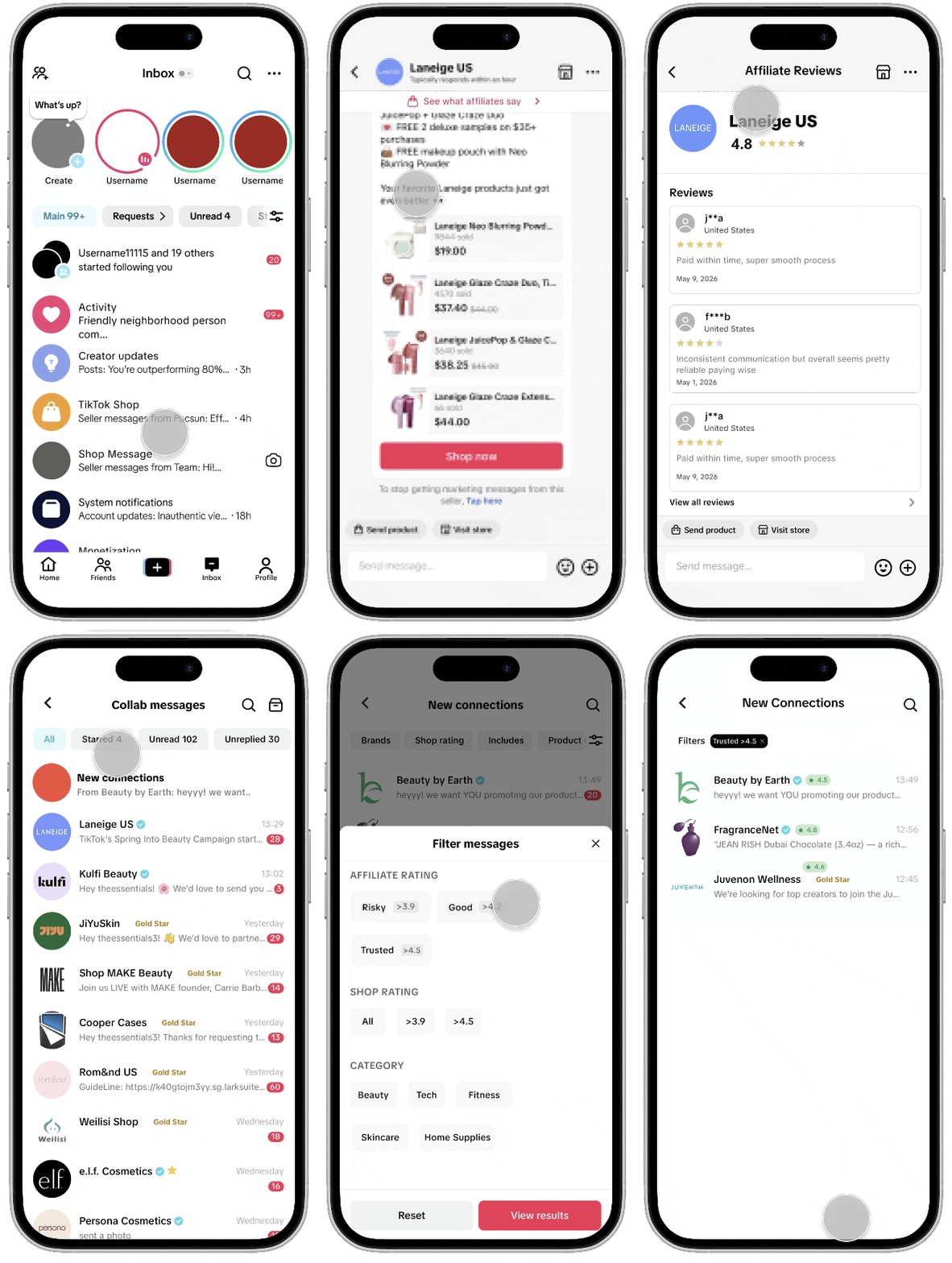
A clearer inbox flow that helps affiliates sort brand relationships by new, active, and previously partnered collaborations, making it easier to manage outreach and keep track of ongoing opportunities.
My role: I added a more visible review entry point inside brand conversations to make affiliate trust signals easier to find and more useful at the moment of decision.
Prototyping & Feedback
The issue
Affiliate creators had no clear way to judge whether a brand was trustworthy before agreeing to work with them. TikTok Shop already showed product ratings and shop metrics, but none of that reflected how brands treated affiliates through payment, communication, or consistency. I needed to explore where affiliate trust signals would be most useful: inside collaboration messages, during product research, or through filtering incoming brand opportunities.
What I explored
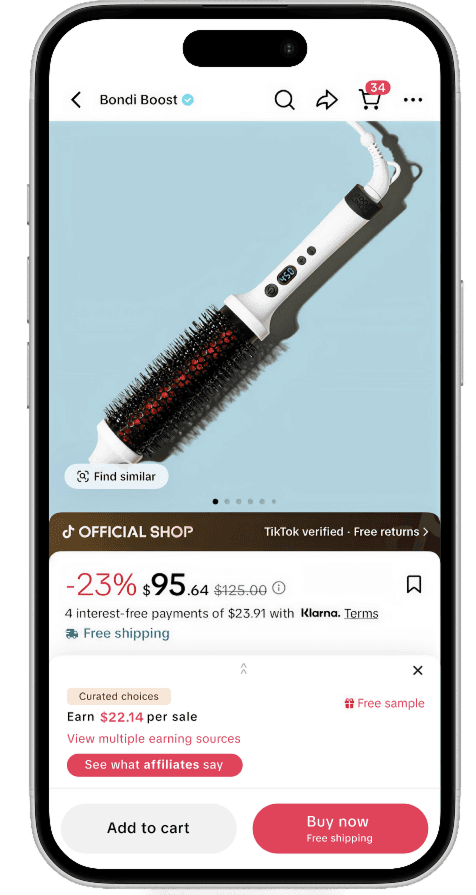
I explored multiple high-fidelity directions for surfacing affiliate trust inside TikTok Shop. One direction focused on the collaboration inbox, where creators could view affiliate reviews directly inside brand messages and organize opportunities through categories like active, previous, and new partnerships. Another direction focused on the product research flow, where affiliate reviews appeared near the commission section so creators could evaluate earning potential and brand reliability in the same place.
This comparison shows how I shifted the design to better surface affiliate trust

How the interaction works
This is how the redesigned flow lets creators go from evaluating commission to viewing affiliate reviews in one step.

User Testing
Testing the flow with affiliate creators
After building the first prototype, I tested the flow with TikTok affiliate creators to see whether the new trust signals felt useful during product research. The main takeaway was clear: creators liked the idea of affiliate reviews, but the feature needed to be easier to find and more trustworthy at a glance.
Instead of treating feedback as a separate hidden page, I redesigned the flow so affiliate reviews appeared closer to the moment creators make decisions — while viewing a product, commission, and brand details.
01. Making reviews easier to find
In the first version, affiliate feedback was buried inside the Shop Performance page and was not clickable. This made it easy to miss.
I moved the feature directly into the product listing with a clear “See what affiliates say” button, so creators can access reviews while they are already evaluating the product.

One participant pointed out that a rating feels more trustworthy when you can see how many people contributed to it.
I added a review count and a filter option, making it easier for creators to understand the rating and focus on the feedback most relevant to them.
After reviewing the interviews, one pattern became clear: affiliate creators are expected to make partnership decisions without meaningful affiliate-side transparency. Most participants could judge whether a product might sell, but not whether a brand would be reliable to work with over time. Trust was usually built after the fact through repeated experience rather than supported by the platform itself. These findings helped define what the redesigned flow needed to do, which was make brand reliability more visible, reduce uncertainty, and help creators make more informed partnership decisions.
Key Findings from Research

The current affiliate workflow gave creators very little visibility into brand behavior, even though that was one of the most important factors shaping whether a collaboration felt worth pursuing.
My role: I designed a clearer way for creators to sort incoming partnerships and access affiliate reviews directly from the inbox flow
Final Product